
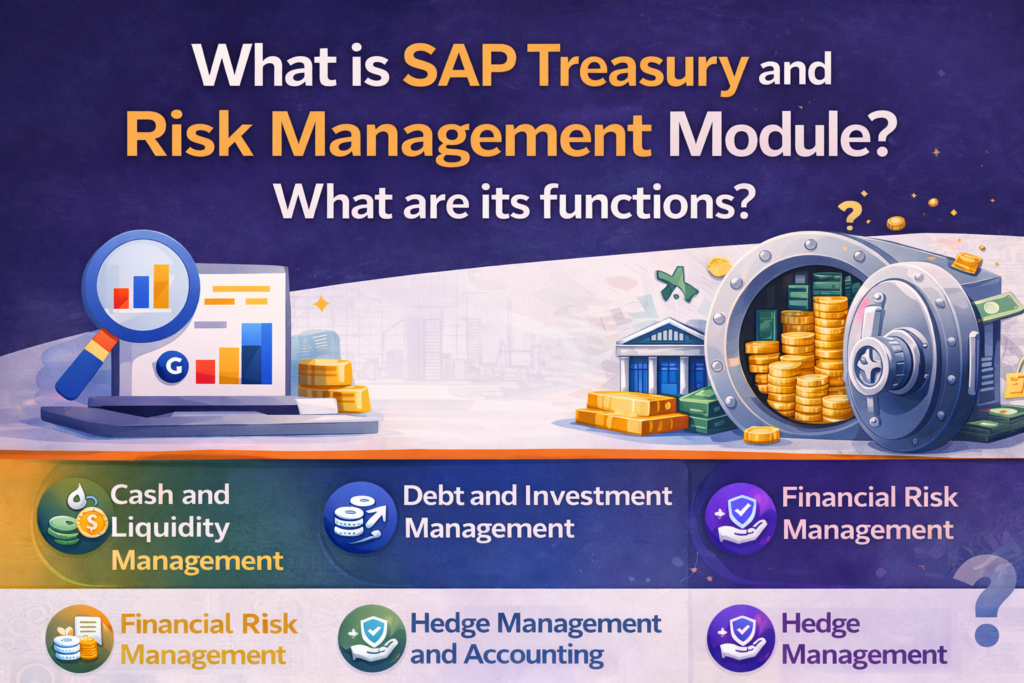
SAP Treasury and Risk Management (TRM) is a comprehensive module within the SAP ERP system designed to manage and control an organization’s financial assets, liabilities, and risks. It plays a crucial role in helping organizations optimize their liquidity, manage financial risks, and ensure efficient handling of financial instruments like bonds, loans, securities, and derivatives.
Key Functions of SAP Treasury and Risk Management
Cash and Liquidity Management
Cash and Liquidity Management helps companies monitor and manage their cash flows in real-time. It supports accurate forecasting, liquidity planning, and optimization of cash balances, ensuring sufficient liquidity is maintained for daily operations.
Debt and Investment Management
SAP TRM helps companies manage their investments, debt obligations, and securities. It supports the entire lifecycle of financial transactions, from recording and analyzing to settling and reporting, allowing efficient management of financial assets and liabilities.
Financial Risk Management
Functional Risk Management allows organizations to manage exposure to market risks such as interest rate risk, foreign exchange risk, credit risk, and commodity risk. By identifying and assessing risks, companies can hedge or mitigate potential negative impacts on financial performance.
Hedge Management and Accounting
SAP TRM helps in creating, monitoring, and executing hedging strategies to protect against unfavorable market movements. It ensures compliance with hedge accounting standards such as IFRS and US GAAP, making it easier for businesses to report hedging activities.
Transaction Manager
Transaction Manager supports managing all types of financial transactions, including loans, securities, and derivatives. It covers the entire process, from deal capture to settlement and accounting, ensuring seamless and efficient financial transaction processing.
In-House Cash Management (IHC)
IHC allows companies with multiple subsidiaries or global operations to manage internal payment processing efficiently. This function optimizes intercompany payments and reduces transaction costs through centralized cash management.
Market Data Management
TRM provides access to and integration with market data for interest rates, exchange rates, and commodity prices. It ensures that financial calculations are based on up-to-date and accurate market information.
Credit Risk Analyzer
Credit Risk Analyzer helps organizations assess and monitor credit risk by evaluating the creditworthiness of counterparties and tracking the credit exposure of financial instruments. It allows proactive risk mitigation by setting credit limits and analyzing potential defaults.
Reporting and Analytics
TRM also includes robust reporting capabilities for analyzing financial data, liquidity forecasts, risk exposures, and performance of hedging strategies. The reporting tools provide insights for strategic decision-making and regulatory compliance.
Benefits of Using SAP TRM
- Improved Financial Risk Control: By providing a structured approach to identifying, analyzing, and mitigating risks, TRM helps organizations minimize losses from market fluctuations and credit defaults.
- Enhanced Liquidity Management: TRM also optimizes cash positions and ensures adequate liquidity for operational and strategic needs.
- Compliance and Reporting: It also facilitates compliance with financial regulations and provides accurate reports for audits and decision-making
- Automation of Financial Processes: Reduces manual tasks and improves the efficiency of financial operations, including transaction processing and reporting.
SAP TRM is commonly used in industries like banking, insurance, and large corporations where managing financial assets and risks is critical.